Sunday, 29 September 2013

Genre- Audiences and Institutions


  • The 'formula' is reproduced again and again
  • For example,  in a Western, we see similar codes and conventions.
Audiences and Genres

  • Why do audiences find genres satisfying?
  • Audiences develop an understanding that certain expectations may be fulfilled and they may find pleasure in predicting what will happen next.
Institutions and Genres

  • Producers of generic narratives depend on a certain amount of immediate communication with the audience.
  • They want the narrative to be easily comprehensible
  • Genres that use key components that are easily recognisable are particularly important.
  • Genres act as a template for production which reduces the risk of losing money at the box office.

  • Audiences know what to expect form a genre but at the same time, want some variations to prevent dissatisfaction and even boredom.
  • Thus any text in a genre is a combination of the familiar and the unexpected.

Key Components of Genre

The key components of genre consist of:

  • Stock characters- which is a character that is instantly recognisable to the audience from other stories for example the popular cheerleader, the bratty younger sibling. The audience can sum up their role in the story in less than a sentence and people will know exactly what you're talking about. These characters are usually one-dimensional in nature. Although sometime, two or more character types can be combined as well.


  • Stock plots- these plots organise the action of an entire script. Most plots occupy a single episode.
  • Stock locations


Problems of a genre

  • Actually defining a genre is inherently problematic,
  • e.g what is the difference between an action/adventure film and thriller?
  • Is Se7en a thriller or horror film?

Genre Theories

Stuart Hall- Reception Theory

This approach to textual analysis puts most emphasis on the audience. At the moment, the individual audience member considers the representations presented to them in the context of their own values, opinions and experiences.


Advantages:


  • People with similar and socio-cultural backgrounds are likely to make similar readings of the same texts.
  • It they can't identify with the genre, they will discard it.
  • You're more likely to watch the genre if you can relate to it.
Disadvantages:
  • The genre can't progress
  • It is hard to change
  • There is a danger of repetition i.e The Saw franchise
  • It can limit audience, alienates the audience
  • There are also limitations of story/plot.

Genre- What is the purpose?


  • To find a film/productions
  • Something that is good for competition
  • For producers to push existing genres/ideas
  • To find a genre that can fit with the season
  • Find different styles
  • Trends of the time/audience
  • Targetting the audience.
Above is a picture of the percentage of US Moviegoers and what they're favourite genre is; Action/Adventure and Comedy are two of the favoured genre of the public.

Youth Orientated Psychographic Segementation

There are seven categories that the youth orientated could be segmented;

  • TRENDIES: those who crave the admiration of their peer- these would be attention seeking and may show off in front of their friends to look 'cool', this sort of person could be a bully using another pupil to mock. They could also be children struggling to fit in as an outsider.
  • EGOISTS: those who seek pleasure- these could be rebellious and be peer pressured into bunking lessons, bullying younger children just for fun etc
  • PURITANS: those who wish to feel virtuous- these children would not want to break any rules and do what they are told in school, this could be considered 'not cool' to their peers and result in them getting bullied.
  • INNOVATERS: those who wish to make their mark- these could be students interested in film making that has a message behind their work. They may be trying to do their own research into the short film industry and come across our film.
  • REBELS: wish to make the world in their image- these children do not follow the rules in school and think they can do what they want. These are the school children that tend to be bullied.
  • GROUPIES: those that just want to be accepted- these may be the outsiders that get bullied in school because they are different ( e.g lower class)
  • UTOPIANS: those that want the world to be a better place- these are other film-makers who try and put out social messages through their work so that the audience can be educated by their work. These people would be interested in film-making themselves therefore may do research into looking at other people's work for inspiration and view our film.

Psychographics


  • Psychographics is the study of personality, values, attitudes, interests and lifestyles.
  • This area of research focuses on interests, activities and opinions
  • It is much more focused than the demographic scale i.e someone's age could put them in a category but it might not reflect their taste.
Here is an example of the difference between demographics and psychographics:


Thursday, 26 September 2013

Demographics- Different Types

Demographics involve putting audiences in categories;


  • Social Grade
  • Description of occupation
  • Example

  • (A)
  • Higher managerial, administrative or professional (Doctors and Lawyers)
  • Company Director
  • Salary: £80-120 k


  • (B)
  • Intermediate managerial, administrative or professional
  • Middle Manager
  • Salary: £ 40- 80 k


  • (C1)
  • Supervisory, Clerical, Junior administrative or professional ( Nurses, Teachers)
  • Bank Clerk
  • Salary:  £25-38 k

  • (C2)
  • Skilled Manual Workers
  • Plumber
  • Students
  • Salary: £16-22 k


  • (D)
  • Semi and Unskilled Manual Workers
  • Labourer
  • Salary: £ 12-15 k


  • (E)
  • State Pensions with no other income, widows, casual and lowest grade earners
  • Unemployed
  • Salary:  £ 5-9 k


Audience Theory- Uses and Gratifications

The uses and gratifications model by Katz and Blumler suggests that Audiences, now 'active', make conscious choices about their content consumption of media. Based on Maslow's Hierarchy of Needs, U and G simply states that audiences consume media to entertain or divert them, provide information, socially interact with others and reaffirm personal identity.


A criticism of U and G is that is does not account for texts or parts of texts which audiences do not consciously choose, or that audiences may not know why they have chosen a text. Finally, audiences may be barely engaged with the text they are consuming and therefore a discussion of the 'Use' or the 'Gratification' seems irrelevant.


In addition, not all audiences have access to all Media, sometimes due to expense and sometimes due to restricted acces, this is especially true of media in Global contexts.

Audience Theory- Two Step Theory

This is the idea that opinion leaders influence our reception of and choice of texts, sits between the Reception and Effects models. The key to the Two-Step theory is the consideration of the opinion leader- whether they are an institutional, commercial agent or an individual audience member with equal power? In the age of social media, is the two-step theory outdated as we are all brought to text through three, four or five steps. Is it possible for the average Audience member to know the source of influence?

Audience Theory - Effects Theory

Effects Theory sees Audiences as Mass- as a group experiencing media and its intended message. Its argued  that media has the impact of Cultivation and that these changes are small and occur over a long period of time. The effects of Media Violence has been studied extensively  and can be used to consider the effects of all media in general. It is beleived that violence can have direct effects ( changes in behaviour) desensitisation( more tolerant of violence in others) Mean World Syndrome ( belief that the world is a scary and mean place, causing anxiety) or Catharsis (a positive outlet by viewing behaviour of others, people do not feel the need to behave in that way themselves.

Audience Theory- Reception Theory

Reception Theory- This essentially views Audiences as Individuals- receiving and decoding messages on a personal, invidual level choosing to either to accept the message ( preferred reading), reject the message (oppositional reading) or select which bits they agree with (negotiated reading). Audiences are active as  the textual mrsning is open to interpretation before Audiences participate in the process. Hall argues that texts are encoded for this 'preferred' meaning, with signs and codes, but that ultimately they are decoded first.

Demographics


Audiences can be seen as:

  •  Receiving texts ( Reception Theory) actively, having power over the message they receive.
or

  • More passively being affected by the media (effects theory) or changed over time as a result of their exposure to the media (cultivation theory)

Main Points for Exam and C/W:

  • How the content of the material affects the target audience, 
  • What do you want the audience to feel within 5 mins?
  • The content is there only because it's what the audience want to see.
  • If the content is intended for a specific audience then it's only natural that the people who it is not intended for lash out or don't understand it.
  • The terget audience will most definitely affect the production costs of a subject.

Monday, 23 September 2013

Case study of Film-maker Christopher Nolan

Christopher Nolan started off his career with a short film called Doodlebug which was created in 1997 which is about a man who waits patiently in his apartment to squash a bug, but maybe he could be hurting himself more than he realises. This was produced by his wife and producing partner Emma Thomas. Christopher Nolan shot the 3 minute long movie on a 16mm black and white film whilst studying at UCL. The main protagonist is portrayed by an actor called Jeremy Theobald, who also starred in one of Nolan's debut feature film called 'Following' a year later. 


This is a good example of what our proposed short film would be, that sense of paranoia and fear, the sense of isolation like the man who from the looks of it hasn't been out of his apartment for days, he's been avoiding calls, so desperate to relieve his mind of this 'Doodlebug', and then at the end, the audience realise what it actually is and how it will personally affect him.


Sunday, 22 September 2013

Barthes' Narrative Codes

Barthes' Narrative Codes

 Roland Barthes developed 5 different codes that apply to films in general in order to be considered a 'good' film, which include:

  • The Enigma Code
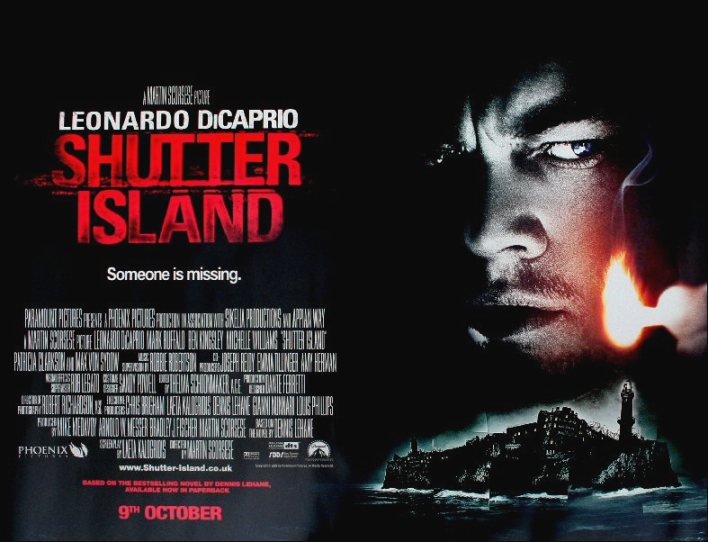
This is something that the audience do not know, in order to build up the tension and suspense within a film, especially the thriller and horror genres or even just any genre in general. Below is a teaser picture from the movie 'Shutter Island'


  •  The Semantic Code
This code is applied to the props that are used in the film, to represent certain concepts and ideas such as wealth. Examples of props which are used to represent wealthy characters are items such as luxury cars, mansions, jewelry and their status within a society. Below is an still from 'Scarface' to show the character: Tony Montana's excessive wealth.


  •  The Action Code
This is referred to an action that the audience can see on screen that isn't explained, e.g in a horror film, a character could be shown running away or maybe even towards something that the audience do not know about. This will build the tension and suspense as the audience are left with unanswered questions that they want to find the answers to i.e Why are they running? Are they innocent or guilty? This is turn makes them stay throughout the film, in order to find out. Below is a scene from 'The Shining'. This scene shows a young boy cycling down a corridor, minding his own business, then he comes across these 2 girls, and the this is the first time the audience have seen them, so they would have questions as to where they came from and how did they get there, as there are only supposed to be 3 people staying in the hotel grounds.


  • The Symbolic Code
This refers to a structure that portrays the meanings through the use of binary opposites, or stereotypes which go against the usual traits and concepts that an audience may have of a film, which include the characters, location., etc... The scene below from 'Kick-Ass' shows stereotypes that go against usual film concepts, the main character, Dave, portrayed by Aaron Johnson is seen as a weak, geeky teen, who dresses up as a superhero and tries to fight against crime in his neighbourhood without any superpowers whatsoever.


  • The Referential Code
This code delves deeper into the audience's wider cultural knowledge, morality and ideology.


Narrative in Short Films

Narrative

What is Narrative?

The way in which a story is told in both fictional and non-fictional media texts.

The narrative of most short films usually include twists and turns in order to make the short film more interesting due to the length of the film, therefore it needs to be enjoyable for the audience, it needs to keep them entertained. 

One of the differences between the narratives of short and feature films is that in the full length ones, there is more tension and suspense as they have the time to full develop a storyline and the characters as well and then the director portrays a shock ending, leaving the audience surprised, which in turn, keeps them interested in the film, however short films haven't got that much time, so everything is condensed to about 5 minutes worth of film, so in order to keep the audience entertained, one must have an enigma, as everything else is going to be too short to explain.
Like the plot twists at the end of 'The Others';


Friday, 20 September 2013

Who are you making a short film for?

Due to the genre of our proposed short film, our targeted audience would likely be for the 16-25 age range, and for those who are thrill-seekers and are looking for something to watch that will be thought-provoking, mind-bending and leave them guessing what will happen till the very end. The Psychological thriller is a hybrid of the Thriller genre.


Psychological thrillers usually revolve around conflicts of the mind, making it a personal enemy to the the protagonist, whether is it their own mind or whether they are constantly questioning their own mind. Thrillers tend to be plot driven to build up the tension and suspense and more often than not, have twists and turns throughout the movie.


In my opinion, psychological thrillers usually attracts more female audiences than male, simply because there are more emotional struggles rather than physical, so I would put the audience percentage at: 60% Female, 40% Male.


However, I don't think there should be a limit on age for psychological thrillers as it can also be appealing to the over 25s, as long as they enjoy this particular genre. However, maybe the targeted audience of 16-25 is not the best one, as there are some young people who opt not to watch a psychological thriller with friends as they tend to find it confusing, some of them want to watch another film which is easier to understand and is less emotional and perhaps opting for a film with a happier tone as some may find psychological films dark and depressing.


Who is the audience for the short films you have looked at?

For my short film, I have been looking at Psychological thrillers like Shutter Island and Memento.


Shutter Island (2010) Directed by Martin Scorsese, Starring Leonardo DiCaprio, Mark Ruffalo and Ben Kingsley


Memento (2000) Directed by Christopher Nolan, starring Guy Pearce and Joe Pantoliano


This type of thriller is usually about the conflict between the characters and is often mental and emotional as opposed to physical, so this would normally attract maybe slightly more of a female audience than a male audience. Most psychological thrillers tend to have some kind of enigma for the audience to work out which is why some people do like watching psychological thrillers as they tend to make assumptions and try to find the conclusion as the film progresses which makes the audience seem like they are right in the middle of the action. There is also an element of horror in them, which can entice a certain type of person as they are thrill-seekers and usually a good psychological thriller can leave them feeling exhilirated. So, perhaps the type of audience for our short film would maybe ones who are maybe older, more intelligent, wanting more of a thought-provoking film which would leave them thinking about what they have seen and how it changed the way they think about certain films, that tickles the brain, because if the audience wasn't able to work out what happened at the end of the film, they might find it boring and deter them from watching any more movies in this type of genres. 

Here are the trailers for Shutter Island and Memento:


Memento:


Who is the audience for short film in general?


Target Audience

The short film industry's audience is quite specific compared to that of a full length film. The 2 main groups of people who will be familiar with short films are unemployed students seeking a future in the film industry and the people who are already successful among the industry.

Demographics

The professional and investors who are employed in the industry may be looking at the short films to find potential in a director, producer or writer to work for them for the particular company. The student sector, a majority of them would be unemployed. They would be viewing the films for inspiration for their own work as an amateur film make. A majority of these films would be familiar with the use of the internet, i.e Youtube.

Psychographics

The audience for short films would be completely different to that of mainstream films. There are many different types of categories within the audience for short film. Some of these categories could be:

  • SUCCEEDERS: These are people who tend to think they are in control and are powerful, successful and ambitious. This group is mainly driven by their income wanting to get their foot in the door of the industry. If they are already successful and are in a powerful position then they would be the type to invest in a new director from viewing a short film and therefore bring more money into their company.
  • ASPIRERS: These are the type of people who want a bigger and better lifestyle. These types are usually of the younger generation who may have probably just finished university with a degree and want their big break into the film industry. Because they want a bigger and better lifestyle, they would probably be watching a lot of short films to get a better understanding about them and they could possible get inspiration for their own short film and eventually get recognised.
  • INDIVIDUALISTS: These are the people are the indepentent thinkers who want to be separate from the crowd. This sector of the audience could include people who just like to express their own opinions and views through the art of film.

Thursday, 19 September 2013

How are short films distributed and exhibited?


In terms of short films, a distributor is a person or an organisation who will represent your film at festivals and markets around the world where one will try to sell it to television which includes terrestial, cable and satellite, airlines and other companies that sell it to television. There are a few prominent short film distributors in the UK which are; Dazzle http://www.dazzlefilms.co.uk/

                                                  Future Shorts:  http://www.futureshorts.com/
                                                   Network Ireland TV: http://www.network-irl-tv.com/
                                                  Shorts International: http://www.shortsinternational.com/


The role of a distributor also includes finding short films to represent their distribution catalogue which are found at film festivals and markets around the world, some of the most well-known and popular festivals are: 


This is the link to the page on the official Cannes Festival website especially for fans of short films and a place where prospective short film directors can display their piece of work. 

This next link is on the official Sundance Festival in London, especially for short films, as a competition for the short film directors: http://competition.sundance-london.com/

Sundance is widely considered to be one of the top short film festivals, and is also perhaps even more varied than Cannes, when it comes to handing out awards. 


There are a other major film festivals where short film directors can make their mark, here is a link to the website containing most of them: http://www.bbc.co.uk/filmnetwork/filmmaking/guide/distribution/links-festivals.

Below are a few examples of some of the Festival Short Film Winners:


This video is called 'Soft' and was directed by Simon Ellis. He won the International Short Filmmaking Award at Sundance and was also nominated for a BAFTA in 2008 with this short film. It is about the gritty story of a son and father who are tormented by a gang of youths, but with neither apparently being brave enough to fight back.


This is a link to another Short Film that was successful. 'Bean Cake' which was directed by David Greespan (2001), won the Palm d'Or for Best Short Film in 2001. It is in Japanese with English subtitles. This story is about a young boy's indoctrination into both the Japanese Empire and the world of girls. This is filmed in black and white to give it a purposefully old-fashioned feel to it. 


Friday, 13 September 2013

How do short films get made? Funding your short film

Usually, short films are made, free of charge, by students like myself just practicing their skills and developing them further. However there are various sources of funding that people can use in order to create their perfect short film. 
You can get government funding for shorts, which mainly comes through the UK Film Council. However,  the UK Film Council has recently announced that they will stop operating in April 2012, when the BFI will take over the majority of its responsibilities. 

Below are some a the ways that short filmmakers can get to fund their film:


  • UK Film Council/ British Film Institute
However, since UKFC has closed, the BFI are taking over the majority of its responsibilities.

  •  National and Regional Screen Agencies
Nowadays however, Screen Agencies are undergoing a strategic consultation and until that is ready, funding options for filmmakers are uncertain. 

  • Local Councils
Normally, local councils will put money towards a short filmmaking idea, especially it if deals with social exclusions or somehow aids the local community in some way. 

  • Charities
A number of charities tend to fund short films. However one must think about the broader messages and about the type of film you are trying to make and one could also link it to the topic/goal of your film.

  • Production Schemes and Competitions
Sometimes, there are some schemes and competitions that are set up by broadcasters and other organisations like the Sundance Short Film Competition in London that can help people fund their short films if they are a success. 


  • British Council
The British Council run a long-established and unique scheme where selected films are promoted to about 50-60 major international film festivals. Some other perks include reduced entry fees and possible travel grants. 

Why do Short films get made?


Why make  Short Films?


One of the main reasons why short films get made is through one's passion for films. One other reason why short films get made it so obtain experience in the subject, by experimenting with people and putting together a team to make a short film. One other reason would be that in order to further one's passion of film-making  the best thing you can do is to practice and demonstrate the kind of skills you receive through learning how to make a film. One other good thing about making films is that you cam try working with different people and see if you can go collaborate on projects in the future. If you do manage to find a high-profile director/writer/actor, one might be able to raise your own film-making profile, or maybe, want to use your film to elevate your own industry profile. One other one would be that you have a certain story that you think would work well on screen and you want to try it out on a small scale first and see if it is successful. 


Short films are a condensed version, or a scene from an intended feature film, but some people like that fact that one is in control with a short film, because the expenses are modest, and usually from their own personal budget. Another good reason to do a short is that feature films tend to have fleshed out characters and complicated story-lines and plots. However, you don't have the time to do that on a short film, so it becomes less about the characters and the development of them and more about the concept, or the 'big picture'. It is more about the idea of easily identifiable characters being portrayed to exemplify a notion or theme.


Sunday, 1 September 2013

Genre in Short Films

There are many different genres in short films which are somewhat similar to those of a feature film, below are a few examples of the short films of various genres, from the website:  http://www.filmsshort.com/genre/


  • Animation: 'Vincent' by Tim Burton (1982)


  • Comedy: 'What Is Facebook Is For' by Mike Booth (2009)


  •  Drama:  'The Last 3 Minutes' by Po Chan ( 2009)


  •  Documentaries:  'Day Of The Fight' by Stanley Kubrick (1951)
  •  Experimental: 'Butterfly of Love' by Nicholas Provost (2003)


  •  Gay and Lesbian: 'Raw Love' by Martin Deus and Juan Chappa (2008)


  • Horror:  'Still Life' by Jon Knautz (2005)


  •  Romance: 'Signs' by Patrick Hughes (2008)


  •  Sci-Fi and Fantasy:  'Ark' by Grzegorz Jonkajtys (2007)


  •  Thriller:  'Sold' by John Robinson Irwin (2011)
  •   War:  'A Message from Fallujah' by R. Gibson (2005) 


The Codes and Conventions of a Short Film


CODES & CONVENTIONS OF SHORT FILM

Length:

A short film usually lasts between 1-20 minutes.

Story lines:

Story lines are generally kept simple and easy to understand. Narrative is condensed and hardly any dialogue. Usually, the characters are developed through images and actions rather than dialogue like in feature-length film. A short film is usually very clear from start to finish which helps structure it and the music is used to set the mood and atmosphere quicker than character's dialogue that is normally portrayed in a feature-length film.  

Character:

Usually one or two main characters, could be binary opposites or two very similar characters throughout the short film, this is because with a longer film, you can take your time to introduce various characters, however having too many characters all at once might confuse the audience. This is done in order to entice the audience as they have too little time to keep the audience interested.


Twist:


There is usually a twist in short films, because a twist allows the audience to become interested and the film maker is able to do this as a short story line gives less clues to the ending.


Creativity:


Short films can be quite creative and abstract and can turn into quirky short films which will interest the audience. The same can be said for animation, through animation, the film-maker's thoughts and imagination are limitless as the boundaries between what's real and not can be distorted to make a much more interesting short film. 


Budget:


Usually low for short films. Therefore special effects are not needed as much, the overall look of the film is usually home-made or arty, they are unlikely to make money. 


Audience:


Audiences will be a lot smaller and will probably be a niche audience rather than mainstream due to the nature, length and narrative, usually not many people are aware of short film, due to the variation of style and technique, short films will only appeal to certain types of audience. 


Emotion:


Short films are used to convey a powerful emotion to the audience, be it happy, sad, anger, terror to make the audience feel part of the action within a certain amount of time and leave thinking about the film and the message throughout it. 


Distribution:


Unlike feature-length films, short films are usually free and easily accessible through the internet. This is the easiest and most effective way for short films to reach audiences as they are seldom shown at cinemas or on TV. Through this way, the audience are made aware of the different types of short films out there.


Opposite to mainstream:


The codes and conventions of short film are opposite to mainstrean as they are portrayed in a different format and style, each short film is different to the other and each will try and portray messages and give audiences different ideas and themes of film in a unique and individual way as opposed to mainstream film.