Sunday, 24 November 2013

Sound Ideas

Here are a few examples of the type of music we are thinking of using in our short film, especially in our second half, the first half will probably consist of maybe natural sounds like birds tweeting, general laughter from the main protagonist and her friends, ducks quacking by the pond, which will then be contrasted when the ghostly presence of Rosalie appears and this is when we will add the suspenseful and eerie music to keep the audience at the edge of their seat.

So for the first bit, we were thinking of some natural sounds, while the girls are walking, like this background sound; http://www.soundjay.com/ambient/sounds/spring-weather-1.mp3


Then add the suspenseful music somewhere in the middle when Rosalie appears using maybe this sound;


Then the FLASHBACK SCENE

We were thinking of using various sounds such as:


Edited Storyboard Pics part 5


Edited Storyboard Pics part 4


Edited Storyboard Pics part 3


Edited Storyboard Pics part 2


Edited Storyboard Pics part 1


Thursday, 21 November 2013

Applying Editing to AS Coursework

To sustain continuity in our opening sequence, we made sure the tripod was at the same level at all times, we used various shots to keep the narrative easy to understand, we used shot reverse shots and high and low angle shots to show the power relationship between the two characters, establishing shots to emphasise the isolation and the dark room portrays the sense of claustrophobia and a feeling of being trapped where one cannot get out, we used the 180 rule in order to not confuse the audience and keep them interested as they wouldn't be deterred if they found the continuity hard to follow, we ensured that the same space is described in each shots. The shots follow the narrative shot per shot in a continuous flow and this opening sequence creates a sense of realism, the edit is invisible so the action appeals rather than constructed. We also used eye-line match shots, for instance when Sam looks down at the pit, we tracked the camera down following his eye-line then zoomed to show the audience that he was looking down at the pit below. 


And we used match on action shots which is when the character begins to move in one shot, the audience see continuation of the same movement in the next shot, e.g when we used a close-up shot of Sam's face waking up and looking around, getting his bearings, we used another shot from behind to show him doing the same action of waking up, raising his head and looking around in order to keep the continuity of the opening sequence.


Applying Genre to AS COURSEWORK

The main genre that our opening sequence last year fit into was Thriller, however this could then sectioned into a particular type of thriller, i.e Crime or maybe even Hostage Thriller, or even Action Thriller.

In the end, I do think that we managed to show audience general expectations of that particular genre, i.e that idea of the hostage/ kidnapper situation, the threat of imminent death, i.e the character in black holding a chainsaw and thrusting it in the hostage's face, if the audience wanted something exciting which kept them at the edge of the seat, we added the element of surprise as at the end of the film, the audience realise that maybe the hostage isn't the good guy, maybe the kidnapper is doing this as an act of revenge.

Location

The location we picked seemed dark and isolated which was perfect for what we were trying to achieve, the fact that no one could hear anyone scream put the audience in fear that the kidnapper would get away with his murder quite easily due to the location.


We used various signs to fit into the genre of a Hostage/Crime Thriller, i.e the tools that could be used as weapons against people.


The dark room that seems quite claustrophobic with no way out. 


The chainsaw is an obvious sign of impending doom for the Sam's character which is shown below;


Applying Represention ( Social Groups) to AS COURSEWORK

When the media turn their attention to the poorest social gorups, the portrayals are often negative or quite stereotypial. The poor are usually portrayed in quantitive instead of qualitative  measures which focus on the numbers that are unemplyed or on benefits, while the wealthy are portrayed in a positive light I.e people focus more on inanimate objects such as luxary cars, costly holiday areas and fashion that only the wealthy can afford.

In our AS coursework, the social groups concerned were young adults, both male, the fact that they don't appear to be in education or a job, portrays the particular social group as lazy, yobs who don't care about their future and probably get involved in the crime world in order to pay their way in this world. This is very stereotypical of young adult males and this is shown in our AS coursework. So we portrayed them in a negative light.


We represented specific groups i.e the fact that young people are unemployed and on benefits with no aspirations in life through the way they spoke to each other, the power of their delivery shows that they are aggressive and even threatening to kill the other person with a chainsaw. The location where the opening sequence was set was somewhere dark and isolated, somewhere in social housing which shows where they live, the character in black is wearing a hoodie, which is stereotypical of youths with bad and lazy attitudes, wearing black, instead of light colours. And the fact that in the end, the character in white gets murdered, justifies the stereotypical representations of the young adults.


Applying Encoding and Decoding to AS COURSEWORK


We used the negotiated code of Hall’s model theory, this accepts some aspects of the encoded representations, i.e. the idea of a hostage/kidnapper situation is used to make the film interesting for the audience, and this is very stereotypical to the thriller genre and crime in particular. In broad terms, the encoded meanings may be endorsed by the audience, i.e. the character in white being tied up is the hostage, and the character in black wielding a chainsaw and threatening to kill him portrays him in a negative light, but at the end of the short opening sequence, the dialogue between them establishes that actually the character in white did something wrong in the past and is paying for his mistakes. But on a local level these meanings being encoded may be dismissed as it is filtered down to the audience and individuals consider some parts of the opening sequence as exception to the general rule that getting one’s revenge balances the score. This is also linked to Stuart Hall's reception theory about audience in particular. The professional code as Producer was to show to the audience that maybe crime can be justified if the person deserved it, i.e an eye for an eye and a tooth for a tooth and at the end the everyone is even, then the crime will stop. But by the end of the opening sequence, we wanted to show that as always, crime doesn't pay, for example in Goodfellas, the audience decoded the message that crime never ever pays and in the end, all the bad characters get arrested. So in the end, the dominant code will prevail, i.e the message that all crime is bad and it will never end well for those to end up using crime to justify anything.


Here are examples from our AS Opening Sequence


Audience will decode the message of hostage type situation looking at the above and below pictures;


 Audience will look at the tools and probably think of imminent death for the character that has been tied up in this hostage situation.


The pit in the middle of the shot will make the audience fear what will happen to the character that has been tied up, will the kidnapper kill him then shove his body down the pit. We are never shown what is actually in the pit, the audience might think of some nasty things already down there, dead bodies, maybe things i.e insects or snakes that will torture him and eventually kill him slowly but painfully.


Sunday, 17 November 2013

Stuart Hall's Model- Decoding

    Stuart Hall- The media deliver hegemonic representations of reality that serve powerful interests. Hall set up an 'Encoding/ Decoding' model as a theoretical attempt to understand hegemonic media processes in practice. He calls on semiotics to examine how media processes in practice. He calls on semiotics to examine how the media guide the ways we make sense of the world.

  • The dominant code- this accepts the encoded meanings of media representations. Consumers adopt a 'preferred reading' of media representations as intended by producers. Therefore the ruling ideology filters down into the public conscience without challenge.
  • The negotiated code- this accepts some aspects of encoded representations but not others. On a general level, the encoded meanings may be endorses by audience but on a more local level these meanings may be dismissed as individuals considers themselves exceptions to the general rule.
  • The oppositional code- rejects the encodings of media producers. Audiences decode media representations in a way that was not intended or foreseen at the phase of production.
In the end, the DOMINANT CODE will prevail most of the time.


Stuart Hall : Encoding and Decoding

Stuart Hall


Encoding and Decoding: simply is what the audience reads/makes sense of; from the text/film

The encoding process happens during the phase of media production whereas 'decoding' is what audiences do during consumption.

'Encoding is guided by a professional code in which media producers follow certain procedures in order to comply with regulatioins and uphold standards of professionalism. This code serves to maintain the political and economic status quo'

However, the phase of the audience decoding doesn't necessarily accept what is encoded in media representations, leaving 3 different types of decoding.


Semiotics and Hegemony

Hegemony is not a forces political movement, however. No one is forced to watch/listen to/ read about anything. It is just sometimes it seems that there are a few alternatives. This is how hegemonies take hold: a majority decide to 'fit in' with the cultural values and ideas of their time and place and the minority keep their objections quiet. Hegemony is about consent, and one of the things it consents to is INEQUALITY- us and them.

HEGEMONY captures the struggle between powerful and subordinate groups in society.

Hegemony in Media

The Power in Media


Through the control of media, certain things can be influenced such as what shows get aired or cancelled and the degree to which a television station covers or does not cover certain news stories. However, in recent years, this media dominance was reduced because of the Internet, which gave individuals and small companies more access and control over different forms of Media such as news and music.


People gradually were then able to easily access and even self- publish music, videos, texts and other works of art rather than being under the control of broadcasting, publishing or other types of monopolistic corporations. Due to the easier access, these works of art would become more available to consumers. News then became dispersed through blogs and social networking websites and so therefore in the end, all these things reduced the hegemony of large, dominant corporations in the news and entertainment industries.

Dominant ideology or Hegemony

Hegemony- What is it?


This is the predominant influence, as of a state, region, or group, over another or others.


The term 'hegemony' refers to the leadership, dominance or great influence that one entity or group of people has over others. Historically, this term often referred to a city-state or country that exerted power over other city-states or countries indirectly rather than through military force. Modern uses of this term would often refer to s group in a society having power over others within that society. For example, the wealthy class might be said to have hegemony over the poor because of its ability to use its money to influence many aspects of society and government.


Ideology

What is Ideology?


It is the ideas behind a media text, the secret ( or sometimes not so secret) agenda of its producers. It is important to be able to identify the different ideological discourses that may be present in even an apparently simple photograph.


For instance, in this picture the ideology behind this is the typical 'Damsel in Distress' Trope. It shows that all women are stereotypically damsels in distress and are weaker than men.


In sociological terms, ideology is a group of ideas or beliefs that underpin a process or an institution which leads to social relations. These beliefs are those held by groups within a society and the most popular ones are those that come about by the dominant groups of the society.


Semiotics in AS Coursework- 'Redemption'

Looking back at our AS coursework,  as Director, I wanted to try and show the audience the underlying meaning behind our short film, through the first screen grab;


The audience can clearly see the power relationship between the two characters, the fact they are wearing the contrasting colours black and white could also be assumed that they are binary opposites. The character in white is looking up at the character in black, helpless and the audience can see he has been tied up. The audience can also see various tools in the background which could signify that the character is menacing and maybe even murderous.

Another screen shot from our short film from last year;


In this bit of the short film, we are trying to show the audience the character in white, Sam's imminent death. The fact that Jacob, the character in black is holding a chainsaw and waving it about and being intimidating and threatening towards Sam shows the audience that he is going to do something very bad to him. The signifier in this case is the chainsaw and the signified, in the context of this scene which involves murder, the chainsaw signifies death and violence. And together, this makes a sign which the audience can then interpret.

Thursday, 14 November 2013

Semiotics

Semiotics is the study of signs, or how things come to have significance. It assumes there is no direct relationship between the real world and the language we use to represent it. According to semiotics, meanings are constructed-  never naturally or universally real. The basic formula for semiotics consists of 'the signifier' ( that which carries the meaning) and 'the signified' ( the actual meaning that is carried). 

There are two significant models of what establishes a sign are those of the theorist Ferdinand de Saussure and the philosopher Charles Sanders Peirce. 

    Ferdinand de Saussure

File:Ferdinand de Saussure by Jullien.png
    Saussure offered a two-part model of the sign. He defined a sign as being composed of:

  • a 'signifier' (signifiant) - the image in the raw, the physical form- A knife is simply a metal implement
     

    • the 'signified' (signifié) - that which carries the meaning, referring to something other than itself- in the context of a scene involving a murder in a shower this knife signifies death and violence. 


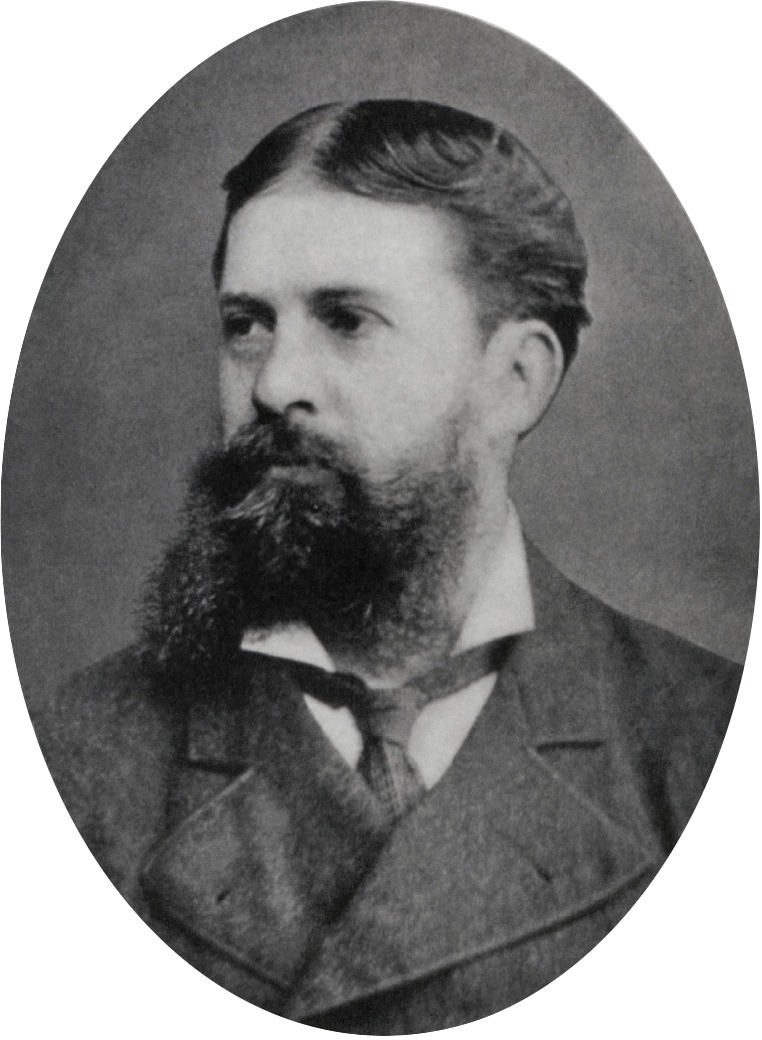
Charles Sanders Pierce


According to another theorist, Charles Sanders Pierce, 'we think only in signs.' He thought that signs take the forms of words, images, sounds, smells, tastes or objects, but these things have no deeper meaning and just become signs when we invest them with meaning. 

'Nothing is a sign unless it is interpreted as a sign'

According to Pierce, anything can be a sign as long as it is interpreted as 'signifying' something which is a sign that is standing for something other than what it really is. 


Both a SIGNIFIED and the SIGNIFIER join together to make up A SIGN.

Semiotics is able to give account for meaning that are absent as well as present in any given representation.